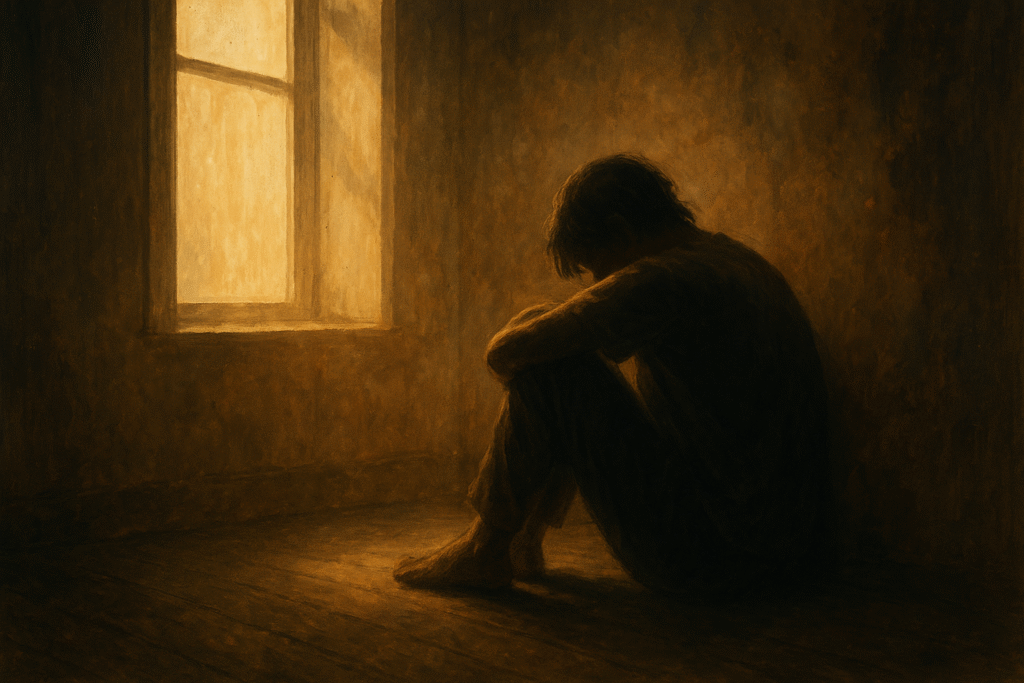
Psychological trauma isn’t just something that happens to us. It’s what lingers afterward — in the way we breathe, relate, sleep, and feel (or can’t feel). It’s not always dramatic or obvious. Sometimes, it’s what we quietly carry, alone, for years.
As therapist Janina Fisher explains:
“Trauma can be a single event, or a series of experiences — like emotional neglect, domestic violence, or abandonment — that overwhelm our ability to cope. What they all have in common is that they leave us changed.” — Janina Fisher
These experiences don’t just stay in our memory. They live in the nervous system, shaping how we respond to the world — even long after the event is over.
“Trauma isn’t what happened to you. It’s what happened inside you because of it.” — Gabor Maté
When does trauma form?
Trauma can happen in a moment. But more often, it builds over time. A child who grows up without feeling seen or safe may carry the imprint of trauma well into adulthood — even if they can’t point to one specific moment.
Being yelled at constantly. Not being comforted when scared. Feeling like you had to be perfect to be loved. These things may seem small from the outside, but on the inside, they can create deep wounds.
In adulthood, trauma can form during events like accidents, loss, medical procedures, or abusive relationships — especially if there’s no support or space to process what happened.
What are the signs?
Many people with trauma don’t realise they have it. They think they’re just “too sensitive,” “too much,” or “not enough.” But the body remembers.
Signs of unresolved trauma can include:
- Feeling anxious, on edge, or like something bad might happen
- Trouble sleeping or always feeling exhausted
- Feeling disconnected from your body or emotions
- Avoiding closeness, or feeling too dependent on others
- Strong emotional reactions that seem \”too big\” for the moment
- Physical tension or pain with no clear cause
- Shame that feels like it lives in your bones
As Bessel van der Kolk wrote in The Body Keeps the Score, trauma isn’t just a story from the past — it’s a current reality for the body and brain. Ordinary life can become full of landmines: a look, a sound, a silence, a moment of intimacy.
And when that happens, it’s not because you’re broken — it’s because your body adapted to survive.
How healing begins
There’s no quick fix for trauma. But there is healing — slow, steady, real.
Healing begins with safety. Not the kind that comes from controlling everything, but the kind we feel in our bones, in relationship, in breath. A sense that it’s okay to be exactly where we are, without needing to be fixed.
At Resplora, we use approaches like Somatic Experiencing, IFS (Internal Family Systems), EMDR, mindfulness, and body-based therapy to gently help clients reconnect with themselves — not just through words, but through sensation, movement, and presence.
Because trauma healing isn’t about going back to who you were. It’s about becoming more fully who you are, with softness and self-trust.
If you’ve ever felt like you’re “too much,” “not enough,” or like you’re carrying something you can’t name — please know: it’s not just in your head.
And you don’t have to face it alone.
📚 References:
- Janina Fisher (2017), Healing the Fragmented Selves of Trauma Survivors
- Bessel van der Kolk (2014), The Body Keeps the Score
- Gabor Maté (2022), The Myth of Normal
- Peter Levine (1997), Waking the Tiger: Healing Trauma
- Stephen Porges (2011), The Polyvagal Theory
Written with heart by the Resplora team.
Frequent Questions
How do I know if I’ve experienced trauma?
Trauma doesn’t always come from one big event — it can also result from smaller, repeated experiences that made you feel unsafe, powerless, or overwhelmed. If you notice patterns like emotional numbness, hypervigilance, anxiety, or difficulty trusting others, it may be worth exploring the possibility of trauma with a professional.
Is trauma only related to abuse or violence?
Not at all. While abuse and violence are clear causes of trauma, other experiences — like emotional neglect, bullying, medical procedures, or even feeling unseen as a child — can also leave lasting marks. What matters is not the event itself, but how your system responded to it.
Can trauma affect the body too?
Yes. Trauma lives in the body just as much as in the mind. Chronic pain, digestive issues, fatigue, sleep problems, and even autoimmune conditions can sometimes be linked to unresolved trauma. This is why body-based approaches to healing (like somatic therapy) can be so helpful.
Will I need to talk about everything that happened in therapy?
Only if and when you feel safe to do so. Trauma-informed therapy respects your boundaries. Healing doesn’t always require retelling your story — sometimes, working with emotions, patterns, or body responses is more than enough. You are always in control of your pace.
Is it really possible to heal from trauma?
Yes — healing is absolutely possible. It may take time, but with the right support, your nervous system can learn to feel safe again, and your sense of self can be restored. You don’t have to go back to who you were — healing means becoming whole in a new way.